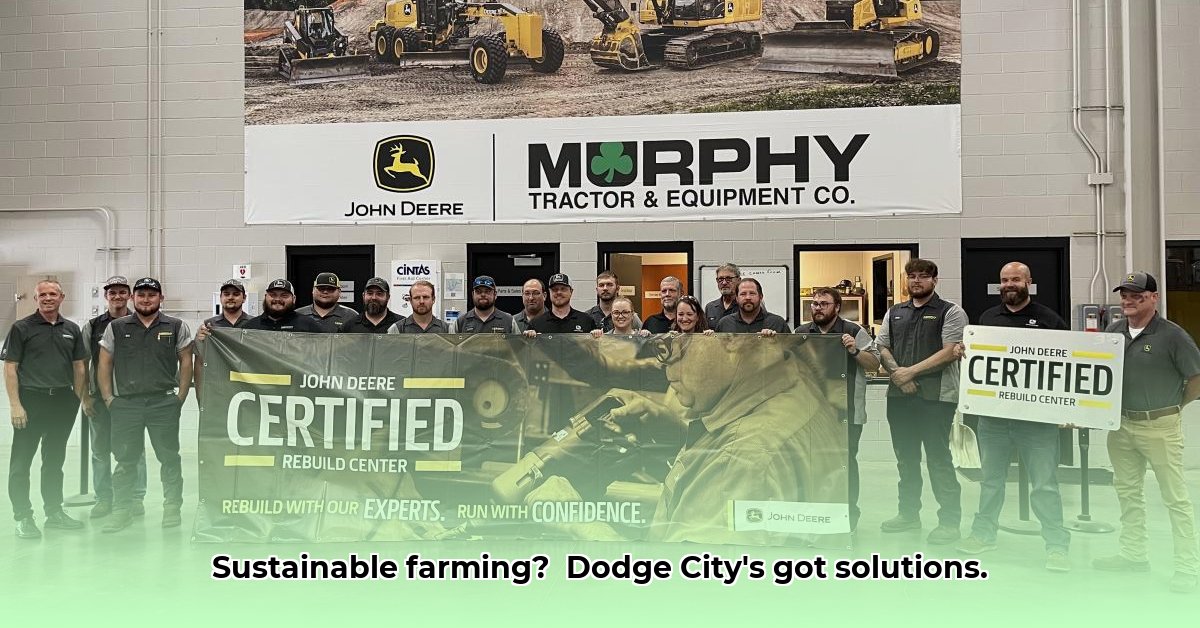
Farming in the arid lands surrounding Dodge City, Kansas, presents unique challenges. Water scarcity, unpredictable weather, and the need for profitability continually test the resilience of local farmers. However, a significant shift is underway—a transition towards sustainable agricultural practices that prioritize both environmental stewardship and economic viability. This article explores the key solutions driving this transformation, highlighting the vital role played by Murphy Tractor and its commitment to supporting sustainable farming in the region. For more information on the cost of essential farm equipment like tractors, check out tractor costs.
Precision Irrigation: Optimizing Water Use in Arid Environments
Water is the lifeblood of agriculture in western Kansas, yet it's a resource that's often in short supply. Traditional irrigation methods often lead to significant water waste through overwatering and inefficient distribution. Precision irrigation, however, offers a solution by delivering water directly to plant roots, precisely when and where it's needed most.
Murphy Tractor provides farmers with access to the latest technology in precision irrigation, including soil moisture sensors and advanced irrigation control systems. These systems monitor soil conditions in real-time, enabling farmers to make data-driven decisions about irrigation schedules and water allocation. This targeted approach minimizes water waste, maximizes crop yields, and ultimately reduces the environmental impact of farming.
"Precision irrigation is not just a cost-saving measure," says Dr. Emily Carter, Agricultural Engineer at Kansas State University. "It's a critical step towards sustainable agriculture in arid regions. By optimizing water use, we can lessen the strain on our water resources while ensuring healthy crop production."
Data-Driven Watering: How much water can be saved using precision irrigation compared to traditional flood irrigation? Studies have shown a reduction of water use by as much as 30-50%, depending on the system and crop. This translates into significant cost savings and reduced environmental impact.
Types of Precision Irrigation: Several options exist, each offering unique advantages and disadvantages. Drip irrigation, for instance, delivers water directly to the plant's root system, highly efficient but can be prone to clogging. Improved sprinkler systems, utilizing smart controllers, offer a balance between cost and efficiency, reducing water loss through evaporation. Choosing the right system depends on specific farm needs and conditions.
Regenerative Agriculture: Building Soil Health for Long-Term Sustainability
Regenerative agriculture focuses on improving soil health as the foundation for a sustainable and productive farming system. Unlike conventional methods that often degrade soil quality, regenerative practices prioritize soil biology and ecosystem function.
Key practices include no-till farming, cover cropping, and crop rotation. No-till farming avoids plowing, preserving soil structure and reducing erosion. Cover crops, planted between cash crops, add organic matter, improve water retention, and suppress weeds. Crop rotation helps prevent nutrient depletion and pest buildup. Murphy Tractor assists farmers in adopting these practices by providing access to appropriate equipment and offering training and support.
Soil Health Benefits: Regenerative agriculture leads to improved water infiltration and retention, better nutrient cycling, and increased carbon sequestration. These benefits translate into higher yields, greater resilience to drought, and a reduction in reliance on synthetic fertilizers and pesticides.
"The transition to regenerative agriculture requires a paradigm shift," notes Mr. John Miller, a fourth-generation farmer near Dodge City. "But the long-term rewards in terms of soil health and farm profitability are undeniable. It’s investing in the future of our land."
Community Collaboration: A Shared Path Towards Sustainability
The transition to sustainable agriculture requires a collaborative effort. Farmers, researchers, government agencies, and agricultural equipment suppliers like Murphy Tractor must work together to share knowledge, resources, and best practices. This collaborative approach accelerates adoption of sustainable techniques, increases innovation, and builds resilience within the farming community. Murphy Tractor plays a crucial role by connecting farmers with the resources and support they need to make the shift to sustainable farming practices.
Community Engagement Initiatives: Successful integration of sustainable practices relies on robust support systems that provide access to information, training, financial assistance, and equipment. Collaboration among farmers, agricultural extension agents, and research institutions increases the likelihood of broad adoption and lasting impact.
How to Get Started: Farmers interested in transitioning to sustainable practices should start by assessing their current farming operations. Consider attending workshops, connecting with other farmers who are already employing sustainable techniques, and seeking advice from agricultural extension professionals. The journey towards sustainability is continuous and involves continuous learning and adaptation.
Ultimately, the widespread adoption of sustainable agricultural practices will ensure the long-term health of the land, the economic prosperity of farmers, and the sustainability of our food system. The path forward requires collaborative effort, a commitment to innovation, and a vision for a future where economic success and environmental stewardship go hand in hand. Murphy Tractor, a cornerstone of the Dodge City farming community, is playing a critical role in making this vision a reality.